
Bbc.co.uk
4 minutes ago
Demonstrations across the country turned violent, with cars and buildings set alight and shops ransacked.

Trump signed the Graham Bill, which targeted Russia over its invasion of Ukraine, into law in September.

South Korea's finance minister said semiconductor growth can last at least through 2027 as supply remains tight despite a global chip sell-off.

Timberland managers buying for pension funds and other institutional investors can wait decades for returns, but the market can also be a profit trap.

The sinking AI trade rattled last week's market. But solid bank earnings and a rotation beyond tech gave us reasons for optimism.

Less than four months into life as a public company, Bending Spoons got a big vote of confidence this week from Berkshire Hathaway.

In the west the technology comes with at least some effort to provide security and a benign intent – not so from ChinaThere is much to fear from artificial intelligence developed in China and handed to businesses and governments in the west almost free of charge.Every month Chinese AI developers such as DeepSeek and Xiaomi dispatch the latest versions of their “open-weight” models that allow users to take the core software and use it without paying an expensive ongoing licence. Continue reading...

Investors may want to rethink their bond allocation and opt for managed futures exposure.

RSPCA Medway West launches its clinic for the pets of people with low incomes.

After nearly three decades as a bankruptcy judge, Sarah Sharer Curley writes about the legal process in her new book, "The Price of Forgiveness."

Whenever a new technology is created, it will, without exception, immediately be used to harass girls and womenYou may be familiar with rule 34 of the internet, which states that if something exists or can be imagined, there will almost certainly be online porn of it. Now let me introduce my rule 35: whenever a new technology is created, it will, without exception, immediately be used to harass girls and women.See, for example, Meta’s “pervert glasses”. As anyone could have foreseen, putting a tiny camera and microphone into smartglasses would immediately lead to people using them to record and harass women. Lo and behold, that is exactly what happened. So-called manfluencers have filmed themselves trying to flirt with women in public spaces and then uploaded the footage to TikTok. The women in these videos are often not aware they’ve been recorded until their identities are shared online and they are harassed by strangers. And what’s Meta doing about this? It’s instituted a few bans and made some privacy updates, but doesn’t seem to have an appetite to properly solve the problem. Indeed, at the Meta Connect 2026 keynote, Mark Zuckerberg did not feel the need to apologize to the women whose lives have been upended by his technology. Continue reading...
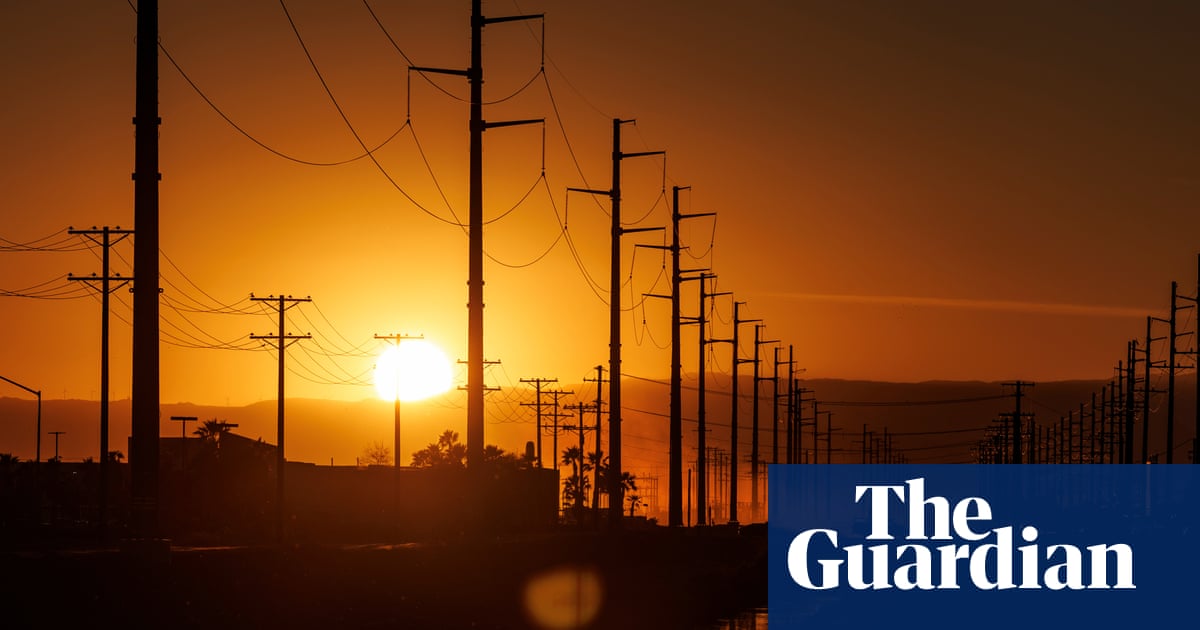
A modern-day prospector promised rural Imperial thousands of jobs and millions in tax revenue – but his plan has set off a firestorm of resistanceSebastian Rucci zoomed in on a map in late 2024, looking closely at a large block of brown earth. The barren plot sandwiched between sprawling alfalfa fields and sleepy desert suburbs was exactly what he’d been searching for – the perfect place to realize his dream of building the largest artificial intelligence datacenter in California.The dusty expanse wasn’t an obvious location. It was in the Sonoran desert, just north of the Mexican border, where temperatures regularly rose past 100F (37.8C). Water was scarce in the once-booming agricultural area, which gets its supply from the beleaguered Colorado River. And then, there was the city of Imperial – population 22,000 – to win over. As controversial datacenter projects have sprung up across the US, residents were naturally skeptical of a new, energy-guzzling neighbor. Continue reading...

Kelly Schultz bought a pumpkin farm in 1996. He transformed it into a seasonal attraction that draws in 100,000 visitors each fall.

Berkshire Hathaway shares are at their highest level since Warren Buffett told shareholders at the May 2025 annual meeting he planned to step down as CEO at the end of that year.

Andrew Bailey among finance leaders to leave session in Bangkok when Russian finance minister addressed groupThe Bank of England governor, Andrew Bailey, has taken part in a walkout of finance leaders who left an International Monetary Fund meeting in protest against Russian involvement.Bailey joined counterparts from France, Germany and a number of Scandinavian and Baltic countries who left the session in Bangkok when the Russian finance minister, Anton Siluanov, addressed the group in Russian. Continue reading...
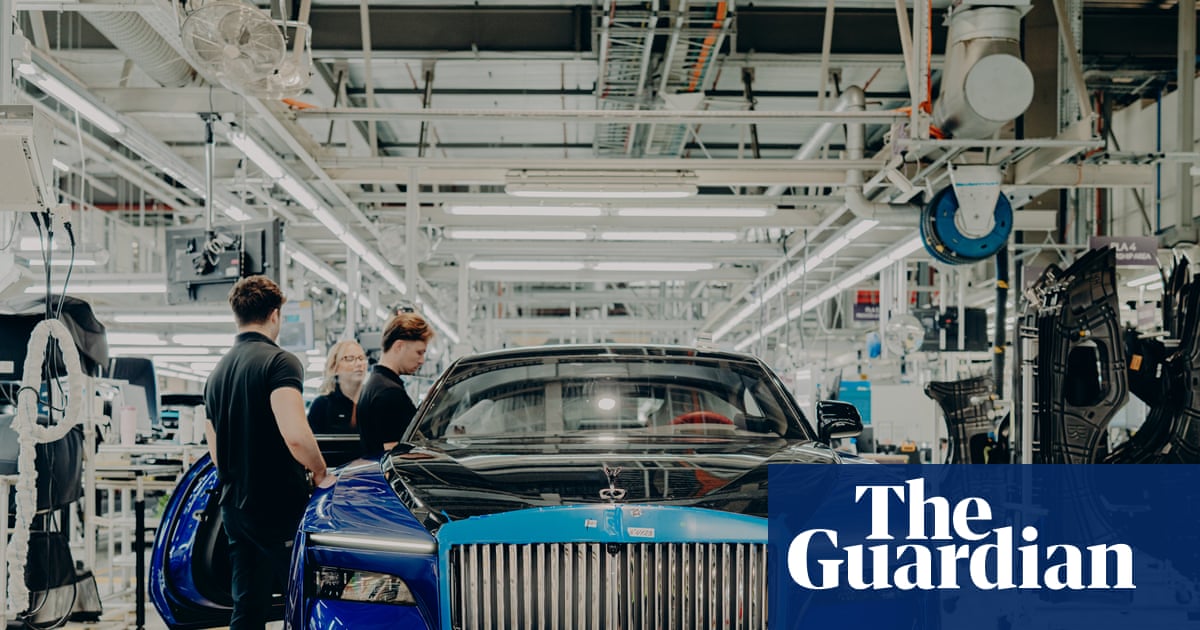
In our second in a series on high-end UK manufacturing, we visit the artisans producing rich clients’ bespoke luxury cars‘Our town is making jeans again’: meet the firm reviving jobs and skills in WalesThey are the plaything of kings, presidents and A-listers, with Rolls-Royce enthusiasts ranging from the Sultan of Brunei to Rowan Atkinson, from King Charles III to Kermit the frog.And at the carmaker’s factory in Goodwood, West Sussex, special requests from customers get more indulgent every year. An interior lined with 3,000 iridescent feathers, or a built-in champagne cooler, or a car built in homage to its owners’ dog, have all become part of the job. Continue reading...

Westminster appears to be waking up to warnings over AI safety, with concerns over its use by extremist groups and bad actors“I have this sense that, within a few months, AI is going to be all anyone is talking about,” said one cabinet minister, with an ominous stare.It was Labour conference, with everyone from ministers to activists jubilant at Andy Burnham’s takeover and a bounce in the polls after the change of leader. Continue reading...

Environmental watchdog Mighty Earth reveals two-year effort to postpone and weaken EU Deforestation RegulationUS corporate lobbyists launched a two-year “blitz” to postpone and weaken the world’s most progressive legislation to protect forests, according to a new investigation by the environmental watchdog Mighty Earth.Major US firms and trade associations, including Cargill, Bunge, Mondelēz and the US Soybean Export Council, as well as numerous other US firms and organizations, sought to influence the EU Deforestation Regulation (EUDR) in more than 350 meetings, the advocacy group found. Continue reading...

Continue reading...

Sky-high oil prices and geopolitical turmoil have made less of a dent than feared … just don’t bank on it to lastInside the vast, glass-walled Queen Sirikit conference centre in Bangkok, the air-conditioned atmosphere was calm as policymakers from more than 100 countries gathered this week for the International Monetary Fund’s annual meeting – and contemplated the surprising strength of the global economy.A small army of smiling, uniformed Thai staff were on hand to explain the baffling geography of the heavily guarded building, where lunch options were as cosmopolitan as the delegates – including, improbably, a Burger King. Continue reading...

The entrepreneur turned fraudster is the subject of an Oscar-tipped new documentary that takes an unusual look at her strange legacyDavid Agus’s first encounter with Elizabeth Holmes at a health conference came as a shock. The Holmes he met in the green room was personable and pleasant. The Holmes he interviewed on stage was altogether different.“The accent changed: this deep voice, very serious,” Agus, a medical oncologist, recalls by phone from Los Angeles. “It was as if I had met a person and then interviewed a separate person. That transition from the green room to the stage – I had never experienced something like that before.” Continue reading...

If cinemas must run 20 minutes of adverts before a feature, they could at least be honest about it. Or, I have a better solution …Do you remember the last time you were lied to? I certainly do. I was tricked by the North Finchley Vue, which sold me and my boyfriend tickets to a 7.15pm showing of The Odyssey. Guess what was playing at 7.15pm? A car advert. Ten minutes later, it was a trailer for the horror film Werwulf. Then there was an advert for Vue – as if I wasn’t already there. The film was half an hour late to its own showing when it finally started at 7.45pm.I am sick and tired of cinemas getting away with such treachery. I don’t want to follow in the footsteps of my friend, who knows that the ads at her local run for 22 minutes so slinks in at just the right time. I shouldn’t have to do mental maths because I am being lied to by cinemas. We are all the victims of their predatory time-wasting system.Jeffrey Ingold is a freelance journalist covering LGBTQ+ issues, music and culture Continue reading...
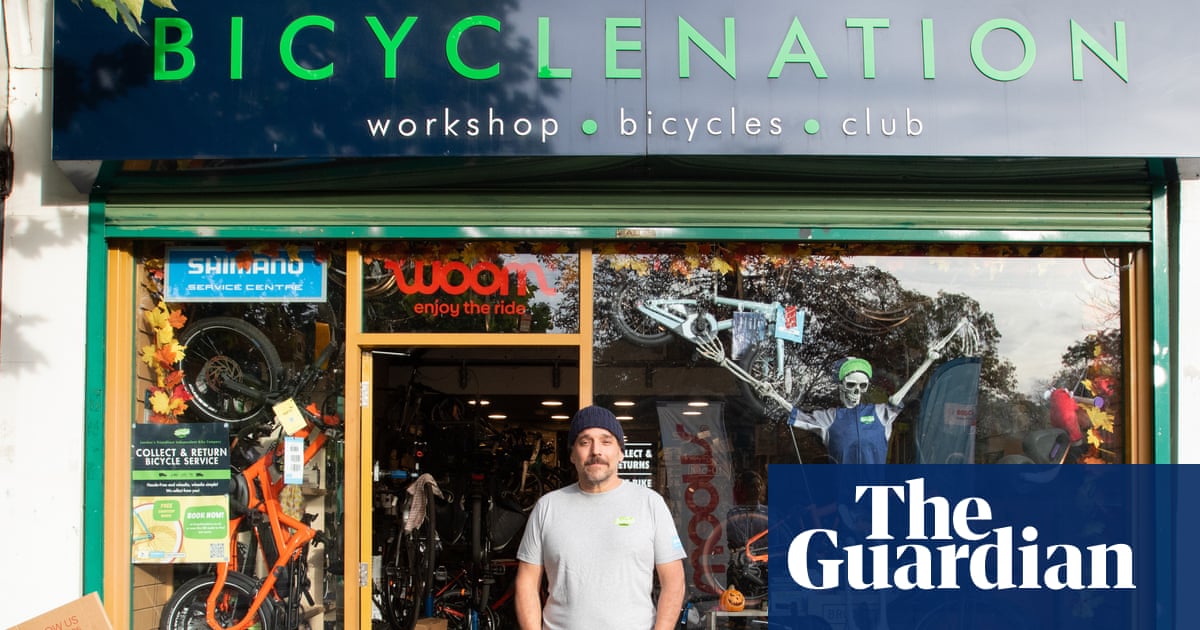
Owner and mechanics fear for their health and future of the Herne Hill shop with no date for fixing problemThe leafy south London neighbourhood of Herne Hill is a haven for cyclists who can often be seen lapping the local parks and refuelling at the many cafes that line the suburban streets. But there is something foul in the air of this corner of the capital – and for once it’s not the traffic fumes hitting bicycle riders.A toxic stench thought to be caused by untreated sewage stuck in Thames Water drains has been emanating from the subterranean depths for months, most likely caused by the summer’s lack of rain. Continue reading...

Data shows 2026 could be worst harvest on record, as growers suggest painting faces on vegetables instead of carvingIn the lead-up to Halloween, front porches across the country feature fat, proudly carved pumpkins, lit from within by tea lights.But this year there is likely to be a shortage due to drought, experts have warned, with the squashes much smaller than usual. Continue reading...