The Guardian
10 hours ago
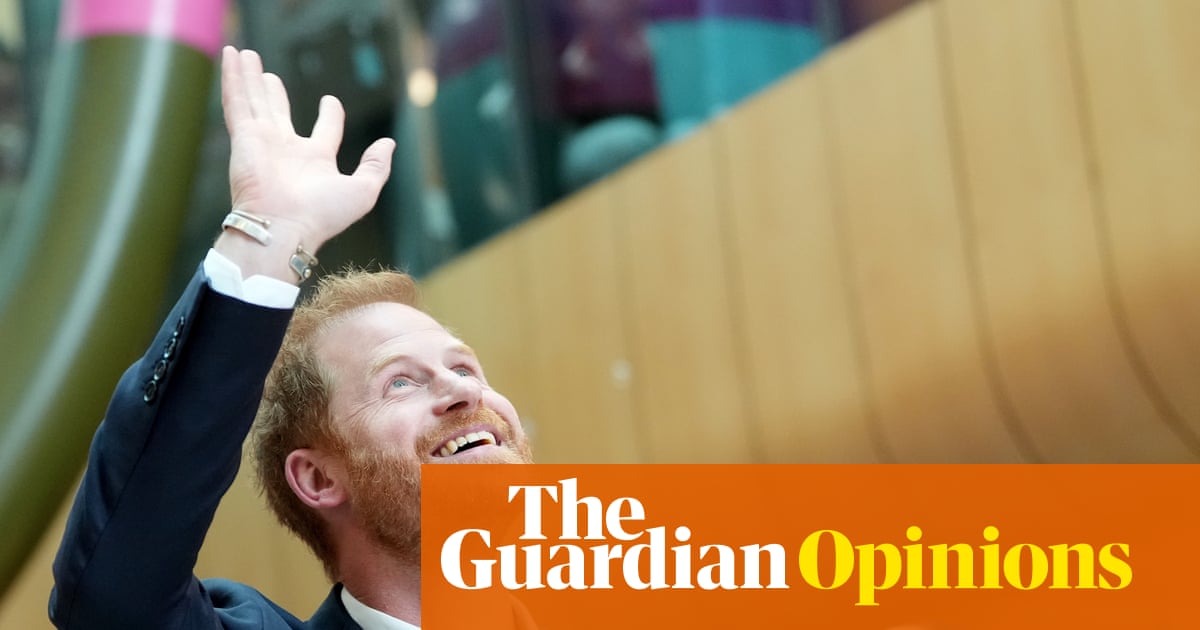
With a sceptical public and hostility from a lot of the press, the Sussexes face quite a challenge. Still, they really could help themselvesThey’re back! Harry and Meghan’s quiet return to England this week, via Birmingham airport, was much anticipated but scarcely celebrated – no bunting or street parties.So far there are many questions but very few answers: not just “why return now?” and “why so suddenly?”, but also questions of security: who pays if not themselves, given that they are not working royals? And where will the money come from to keep them in the style to which they are accustomed?Steve Bates is a former Guardian royal correspondentDo you have an opinion on the issues raised in this article? If you would like to submit a response of up to 300 words by email to be considered for publication in our letters section, please click here. Continue reading...
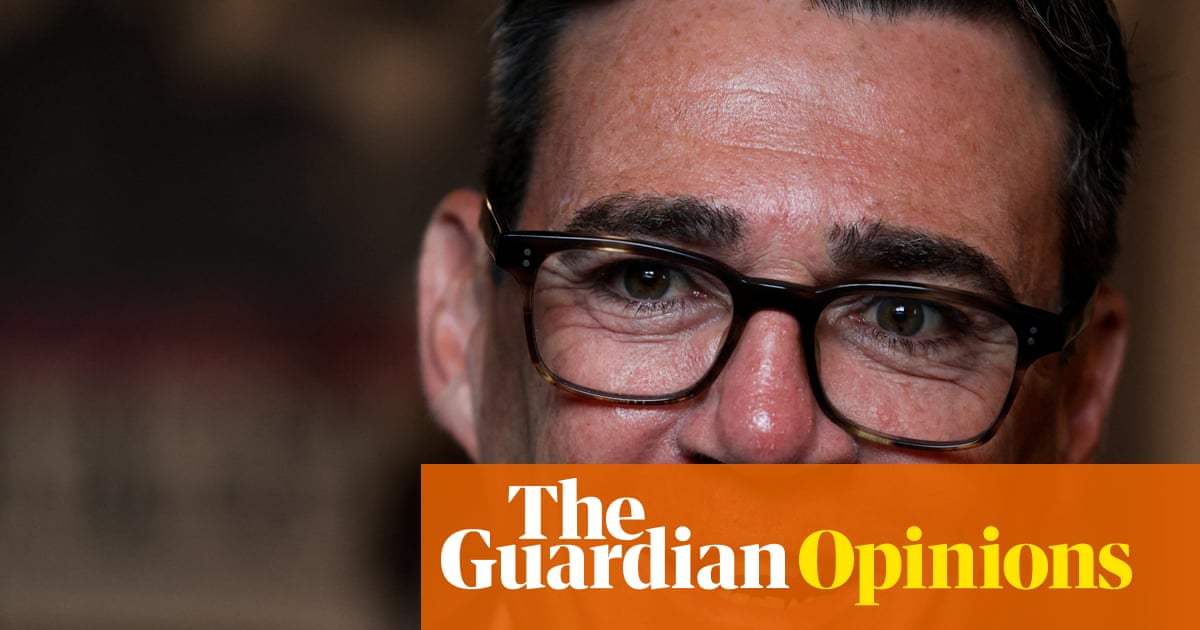
Before becoming prime minister, Andy Burnham favoured a £500,000 donations cap. In office, he’s backing away. That is a mistakeOn the campaign trail in Makerfield, Andy Burnham told a democracy activist that he favoured a political donations cap of around £500,000 and wanted it reduced over time. His government is now resisting amendments that would move in precisely that direction. Mr Burnham was right in May. He is wrong now. It is difficult to argue that restricting a single person to giving half a million pounds a year to a political party would damage democracy. Such a cap would only affect the mega-rich. Reducing the cap would force parties to wean themselves off the present regime that allows the rich too much say.There are two contra arguments swilling around Labour. The first is that there should be room for wealthy, progressive donors – whose cash helps rebut claims that Labour is in the pocket of the trade unions. The second is the warning from unions that a cap could undermine their ability to contribute to the Labour party.Do you have an opinion on the issues raised in this article? If you would like to submit a response of up to 300 words by email to be considered for publication in our letters section, please click here. Continue reading...
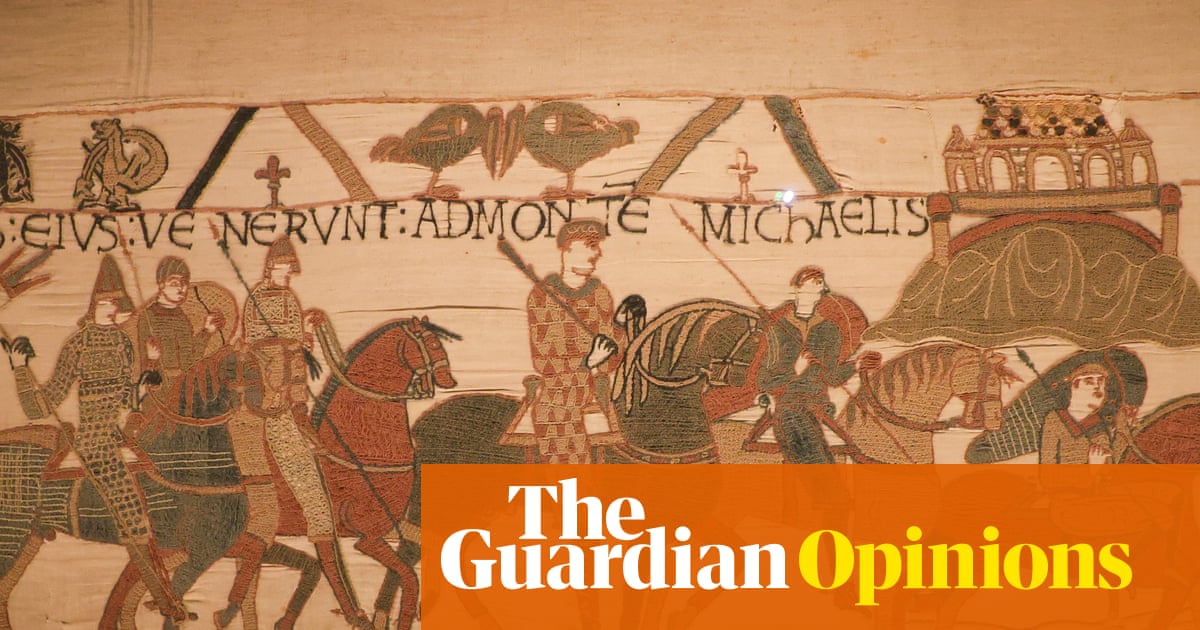
The British Museum’s landmark cultural exchange is a symbol of post-Brexit rapprochement between Britain and France“Harold Rex interfectus est”: King Harold is killed. As every British schoolchild knows, the Bayeux tapestry depicts a turning point in the history of these islands: defeat at the Battle of Hastings in 1066, which would lead to the ascent of William the Conqueror to the English throne. Its return to the UK for the first time in nearly 1,000 years is being hailed as a hugely historic moment in its own right. The loan of the tapestry (technically an embroidery of wool on linen) to the British Museum in exchange for UK treasures from Sutton Hoo is the ultimate manifestation of soft power – a 70-metre symbol of post-Brexit Anglo-French rapprochement in comic-strip form.Ticket sales for the exhibition, which opens on 10 September, were the biggest in a single day in the museum’s history, with online queues of 80,000. Radio 4 is devoting a day of special broadcasts to mark the arrival of the tapestry, including a new drama with verse from the poet laureate Simon Armitage. The museum’s videos explaining this tale of ambition, friendship, betrayal and revenge are fittingly narrated by Traitors presenter Claudia Winkleman. Norman-mania is here.Do you have an opinion on the issues raised in this article? If you would like to submit a response of up to 300 words by email to be considered for publication in our letters section, please click here. Continue reading...
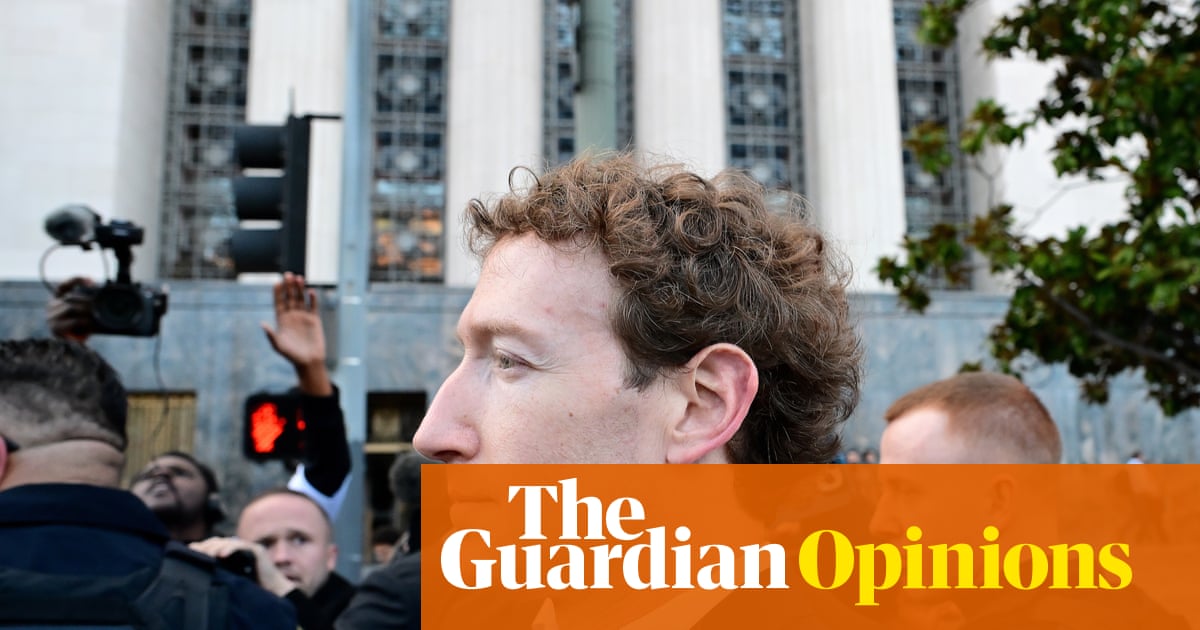
Those who said Meta harms children struck a blow, but the ability of big tech to gouge profits and cause harm is barely diminished. That’s the battle to comeFollow the money. If you want to know how the tech giant Meta really feels about the $18bn it agreed to fork out to end a landmark lawsuit against it – an outcome widely hailed as a victory for campaigners – just look at its share price. It didn’t go down when word came on Wednesday that Meta had settled with the 29 US states that had argued that the company’s Facebook and Instagram platforms harmed children. On the contrary, Meta stock went up, initially surging by 5%, before levelling out at a gain of just over 1.25%. There could be no clearer proof that the money men reckon Meta dodged a bullet.To be sure, there was plenty to hearten those who have long believed that social media damages teenagers especially, whether by exposing them to content they shouldn’t see or by sapping their self-esteem, offering them filters that show how much prettier they would look if they had cosmetic surgery or giving them a metric of their popularity – and unpopularity – in the form of a running tally of “likes” and views.Jonathan Freedland is a Guardian columnistDo you have an opinion on the issues raised in this article? If you would like to submit a response of up to 300 words by email to be considered for publication in our letters section, please click here. Continue reading...

Jill White responds to an editorial calling for fossils to be given legally protected national-treasure statusI write this while sitting on Charmouth beach in Dorset with my required reading of the Saturday Guardian, as I do regularly. Your editorial (The Guardian view on the export of fossils: they deserve national treasure status, 21 August) produced a hollow laugh as – this being the centre of fossil hunting on the Jurassic Coast – I am surrounded by armies of hammer-wielding tourists busy smashing the daylights out of any rock available around them. The vast majority have no idea which stone types are likely to bear fossils and don’t report any finds even if they are lucky. Others take carrier bags full of stones back to their cars.Thus, we have no idea what fossils are being lost to the record every single day here, and so I completely support the suggestion of giving them legal protection. Of course, amateur collecting has a valuable place in unearthing important fossil finds, but only if they are shared and documented. The Charmouth Heritage Coast Centre valiantly tries to educate and inform visitors, but sadly these will inevitably be the minority. Continue reading...
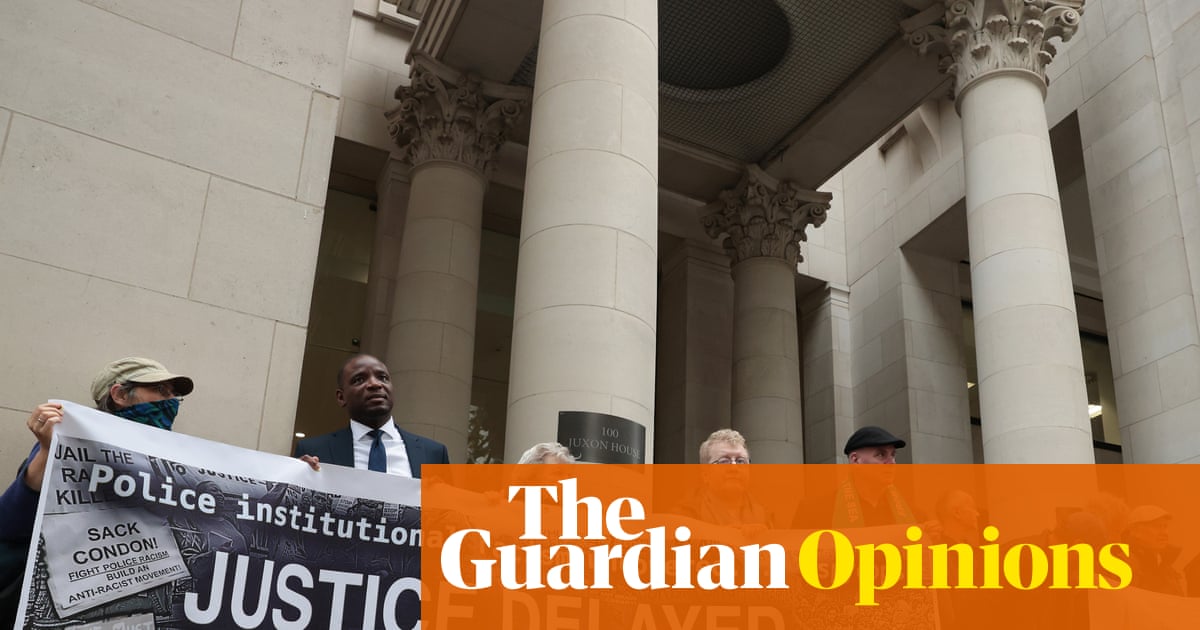
Doreen Lawrence and other victims of police surveillance have waited decades for justice. Delays and expense due to Met intransigence are no excuse to deny them thatIn June 2013 Peter Francis, a former Metropolitan police officer, broke a 20-year silence about the role he had played in surveilling the family of Stephen Lawrence in a documentary jointly made by the Guardian and Channel 4’s Dispatches programme. Two years later, thanks in part to the programme, the Home Office established an undercover policing inquiry, commonly known as the spycops public inquiry, to shed light on the scale of surveillance of activists and trade unionists. That inquiry is now under threat.Francis had served in the Special Demonstration Squad (SDS), a Met unit founded in 1968 whose officers lived for years at a time inside political and campaigning organisations under false names.Imran Khan KC is a practising solicitorDo you have an opinion on the issues raised in this article? If you would like to submit a response of up to 300 words by email to be considered for publication in our letters section, please click here. Continue reading...
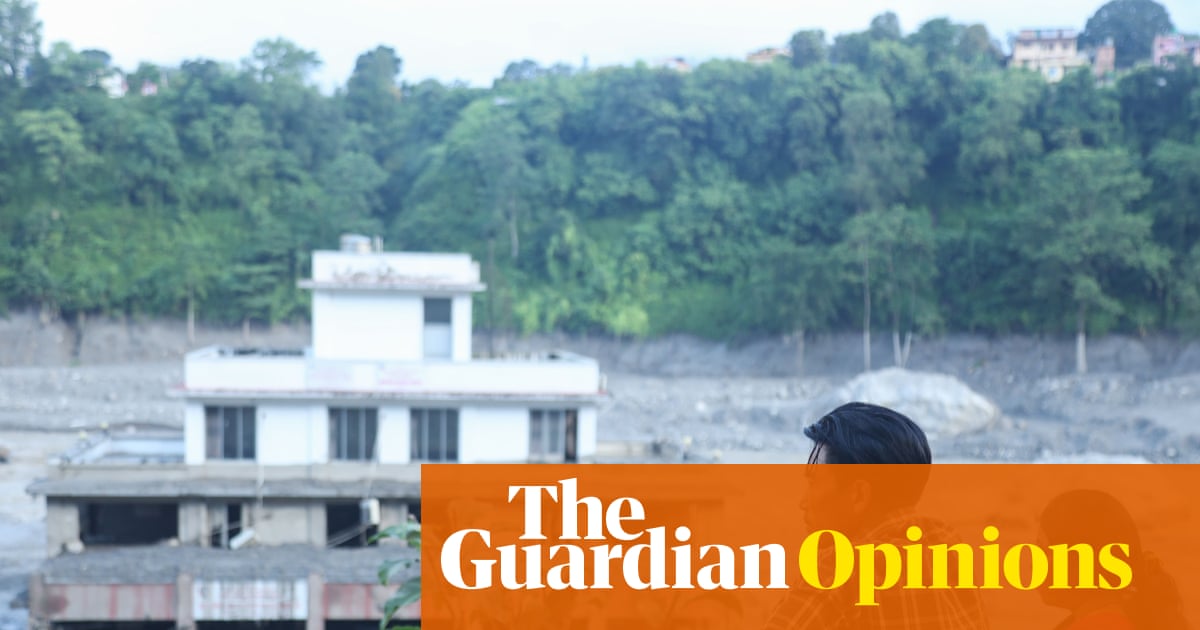
Nepalis and Tibetans must not pay the price – with their lives, livelihoods and money meant for education and health – for global heating caused by wealthy statesSunil Acharya is an international climate policy and just transition specialist based in Kathmandu, NepalAs a Nepali citizen working on international climate policy for more than a decade, it is difficult to look at the harrowing images coming out of the catastrophic flash flood that thundered down valleys in Nepal, sweeping down the Lhende Khola, Bhotekoshi and Trishuli rivers, and not feel angry.Not just because of the destruction, but because it comes after years of warnings from scientists and civil society that a rapidly warming planet would make disasters more frequent, more intense and harder to predict. This is what the cost of delaying global climate action looks like.Sunil Acharya is an international climate policy and just transition specialist based in Kathmandu, NepalDo you have an opinion on the issues raised in this article? If you would like to submit a response of up to 300 words by email to be considered for publication in our letters section, please click here. Continue reading...
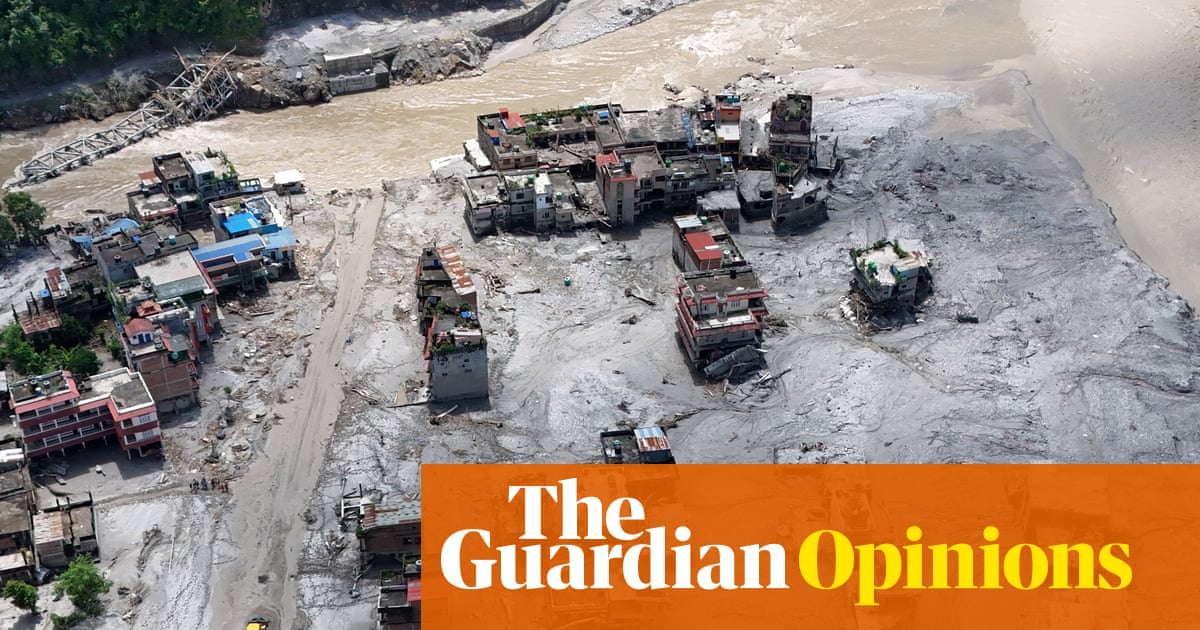
Medicine, food and other supplies are the urgent priority. But the rising risks from shrinking glaciers must be faced tooThousands of people in Nepal and Tibet are in desperate need of emergency assistance following Wednesday’s disaster. With 360 people confirmed dead, more than 1,300 others are still missing as search and rescue operations continue. The precise sequence of events linking glacier collapse to flash floods is yet to be confirmed. But there is no doubting the enormous destructive power of the brown torrent that can be seen on video clips surging down the steeply sided Himalayan valleys, sweeping away everyone and everything in its path.Testimony from survivors about terrifying near-escapes and losses is reminiscent of previous disasters, including the 2004 tsunami. With some of the worst-affected areas still cut off and accessible only by helicopter, there is a high level of uncertainty about the total number of people who have died or homes that have been destroyed. Existing medical, food, shelter and sanitation supplies will need to be replenished. Pledges of help for locally led relief efforts from foreign governments and agencies, following reports that hundreds of those missing were tourists or pilgrims, must lead to swift action. People need basics including electricity and clean water before they can start to rebuild and recover.Do you have an opinion on the issues raised in this article? If you would like to submit a response of up to 300 words by email to be considered for publication in our letters section, please click here. Continue reading...

Soaring prices are plunging struggling families into debt. The government must support them in the short term as it invests in a clean energy futureFuelled by the consequences of Donald Trump’s disastrous war on Iran, household energy debt in Britain is continuing to soar, rising to a record £6bn by the end of June. That figure is set to hit £7bn by the end of the year, as the government’s cap on gas and electricity prices goes up to a three-year high in October. The human cost among the less well off will be more people regularly choosing whether to skip meals, ignore other bills or stay cold this winter.Such is life at the sharp end of the cost of living crisis, which Andy Burnham has made it his priority to address since arriving in Downing Street. The day after he became prime minister, Mr Burnham announced that VAT would be removed from electricity bills from the beginning of October. But the Middle East-related rise in the price cap, announced on Wednesday, more than wipes out the effect of his cut. In an era of geopolitical volatility, high energy costs have become the new normal.Do you have an opinion on the issues raised in this article? If you would like to submit a response of up to 300 words by email to be considered for publication in our letters section, please click here. Continue reading...

Guardian columnists and writers on what they’ve been debating, thinking about, reading, and more Continue reading...