The Guardian
17 hours ago
I fear for what comes next because medics must be able to ask questions, raise concerns and admit mistakes. A defensive staff is dangerous for everyoneMark McDonald is a barrister representing Lucy LetbyI have been Lucy Letby’s barrister for the past two years. I have spent thousands of hours going through the evidence, speaking to experts and examining what happened to the babies who died or became seriously unwell on the neonatal unit at the Countess of Chester hospital. I have worked with nearly 30 experts, including internationally recognised specialists in neonatology, pathology, insulin, statistics and other fields. It may be to some an inconvenient truth, but I am convinced that Letby is innocent, and her convictions represent one of the most serious miscarriages of justice in modern British legal history. That means she was failed by the police, the NHS, the criminal justice system and, importantly, a plethora of experts who simply got it wrong.My work on the case has also raised wider concerns about the evidence and conclusions surrounding the deaths on the neonatal unit, and what the lessons being drawn from this case will mean for doctors and nurses in neonatal medicine.Mark McDonald is a criminal defence and human rights barrister specialising in miscarriages of justiceDo you have an opinion on the issues raised in this article? If you would like to submit a response of up to 300 words by email to be considered for publication in our letters section, please click here. Continue reading...
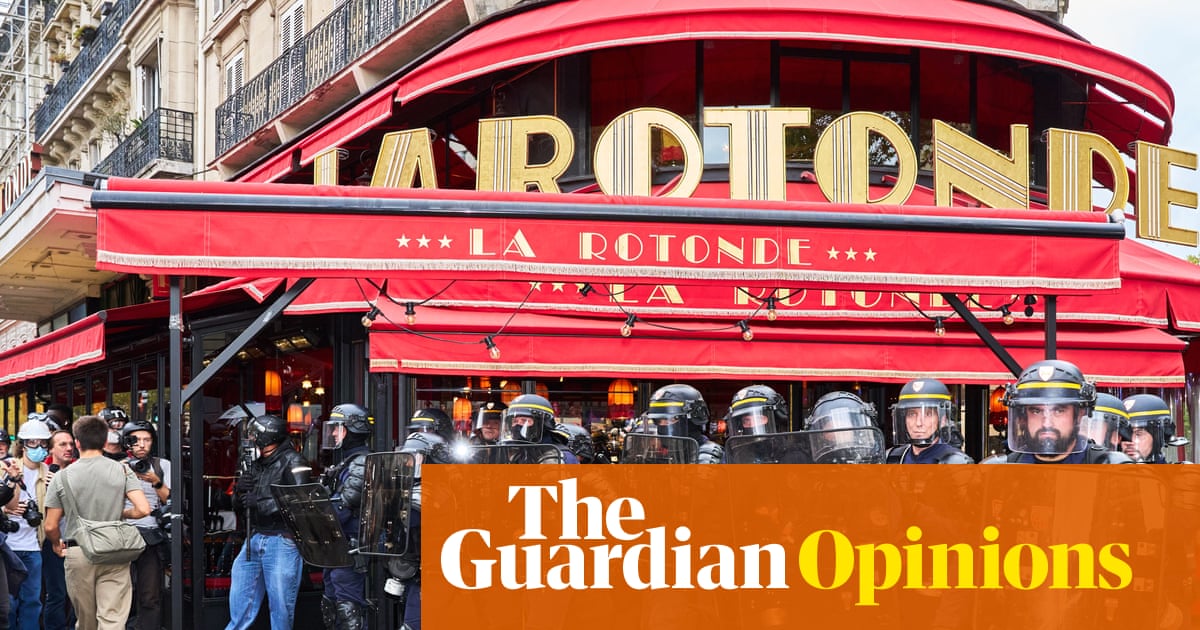
To protest against shameful conditions in schools is entirely legitimate. The government’s response is notAs a secondary school pupil in 1994, I took part in protests against a reform that would have allowed French employers to pay young people below the minimum wage. Our campaign was successful, but if we had had to face the terrifying police response unleashed on student protesters in France over recent weeks, I would have stayed at home.A 14-year-old boy, Eden, suffered a fractured jaw and had teeth knocked out after a police teargas grenade struck him in the face. Sixteen-year-old Maël lost the sight in one eye allegedly after being struck by a shot from an LBD, a form of rubber-bullet launcher. Evan, 15, had his hand blown off in an explosion involving a police stun grenade. And in Dunkirk, a police SUV is alleged to have driven repeatedly at groups of secondary school pupils, as an officer could be heard saying: “Come closer, we’ll smash their fucking faces in.” Accounts from children left terrified by brutal treatment in police custody describe traumatic experiences with severe psychological and physical consequences.Rokhaya Diallo is a French journalist, film-maker, activist and Guardian Europe columnistDo you have an opinion on the issues raised in this article? If you would like to submit a response of up to 300 words by email to be considered for publication in our letters section, please click here. Continue reading...

Financiers owe their windfalls and bonuses to higher interest rates. Britain should reclaim more for the public and resist City lobbyingJohn Healey is planning to tax British banks, the Guardian revealed, in the forthcoming budget. It’s about time for the chancellor to act. Banks have been raking it in. The campaign group Positive Money reported this summer that Britain’s four biggest banks made £29bn in the first half of this year, up a fifth on 2025. These windfalls owe more to higher interest rates than better products or services. Households and businesses pay more to borrow. Meanwhile, the Bank of England pays the banks tens of billions in interest on their reserves, with the Treasury footing the bill.The chancellor is said to favour restoring the bank surcharge from 3% to 8%, which could raise around £2bn a year. This would recover a very modest share of the sector’s bonanza. Louis XIV’s finance minister, Jean-Baptiste Colbert, said that “the art of taxation consists in so plucking the goose as to obtain the largest possible amount of feathers with the smallest possible amount of hissing”. Britain’s banks have plenty of feathers. That hasn’t stopped them hissing. The banks say that they already face higher taxes than other companies, that they won’t be able to lend as much, and that their profits won’t last.Do you have an opinion on the issues raised in this article? If you would like to submit a response of up to 300 words by email to be considered for publication in our letters section, please click here. Continue reading...
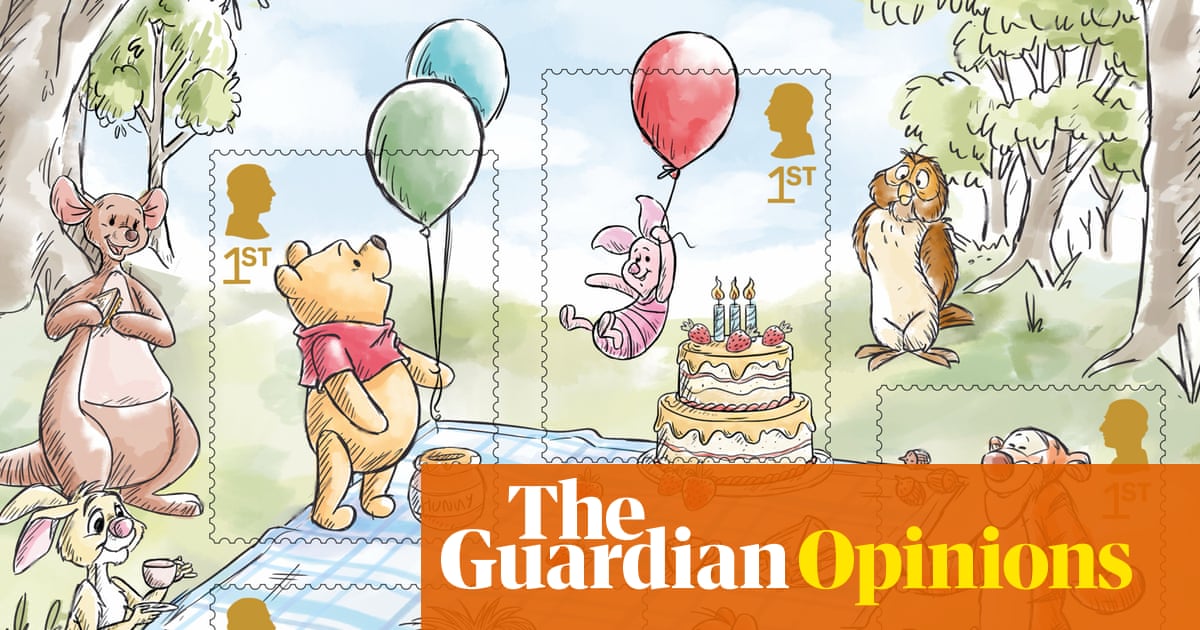
He may have been eclipsed by the more progressive Paddington of late, but AA Milne’s creation is not just a Silly Old Bear“Pooh, promise you won’t forget about me, ever. Not even when I’m a hundred,” Christopher Robin implores his bear in the final chapter of AA Milne’s The House at Pooh Corner. This week Winnie-the-Pooh himself turned 100, and he certainly hasn’t been forgotten. Birthday celebrations have included a week of special programmes, introduced by the queen, on Radio 4; a collection of Royal Mail stamps; and a Google doodle.Not bad for “a bear of very little brain” who appeared in four slim books. Winnie-the-Pooh, illustrated by EH Shepard, was published on 14 October 1926 and had sold 150,000 copies in the US by the end of the year. Continue reading...
Tech platforms pillage public-interest journalism for profit. But we have leverage as they sow the seeds of their own downfallCarine Fouteau is president and publishing director of the French investigative news outlet MediapartBig tech companies pose an immeasurable threat: socially, politically, militarily and ecologically. They are also causing a profound crisis of information. The tools they design now serve as weapons of mass destruction against democracy. There is so much at stake that an urgent and broad mobilisation is required.From the harvesting of personal data and the weaponisation of public opinion, to the destruction of jobs, the infringement of civil liberties and environmental damage, ordinary citizens are the main victims of this predatory economy – an economy with an agenda that aligns with the interests of the planet’s most authoritarian and reactionary states.Carine Fouteau is president and publishing director of the French investigative news outlet MediapartMediapart is hosting Hacking Big Tech, a public event about technology, AI and democracy in partnership with the Guardian, in Paris on Saturday 17 October 2026. The conference will be live-streamed free on Mediapart’s website, app and YouTube channel and can be accessed here from 1pm CEST on 17 October Continue reading...
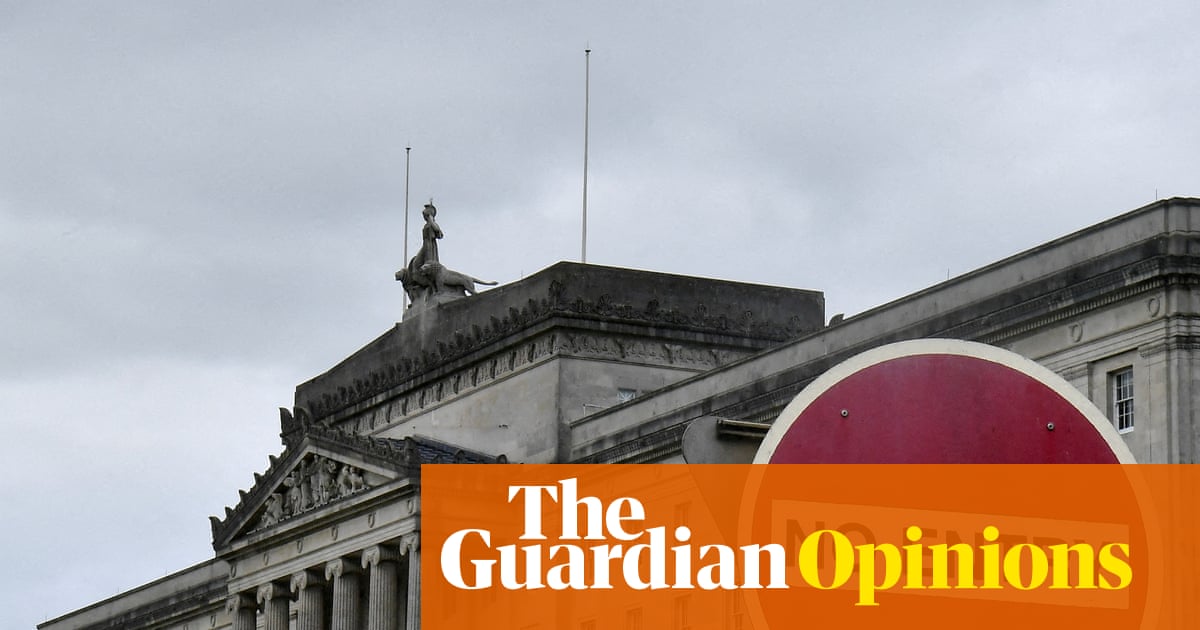
After the executive’s failure to set a budget, and renewed culture-war confrontations, faith in the government’s ability to act in the common good is evaporatingLate last month, protesters deposited a sizable amount of foul-smelling green water on the steps of Stormont to draw attention to the appalling state of Lough Neagh, the largest freshwater lake in the British Isles. Years of agricultural pollution have created an environmental disaster in an area of huge ecological significance that once inspired the poetry of Seamus Heaney. Its plight should be a top priority for Northern Ireland’s devolved government. But the executive currently has other matters on its mind.The sentencing of the former leader of the Democratic Unionist party (DUP) Jeffrey Donaldson, after he was convicted of child sexual abuse, dominated Thursday’s headlines. Meanwhile, a cross-party political crisis continues to play out. Halfway through the financial year, Stormont has yet to set a budget. The current deadlock in negotiations with the Northern Ireland secretary, Sir Chris Bryant, could lead to one being imposed from Westminster. Cuts are already being made by default amid an atmosphere of stasis and policy drift.Do you have an opinion on the issues raised in this article? If you would like to submit a response of up to 300 words by email to be considered for publication in our letters section, please click here. Continue reading...

Experts are warning that the UK is unprepared for crises. A refrigerator cyber-attack scare in France is the latest reminder of the risksWhat’s worrying French supermarket bosses should be prompting British ministers to action. On Sunday, hackers forced up the temperatures of refrigerators in hundreds of food stores across France to as high as 50C, resulting in waste and fires. Beyond the immediate destruction and inconvenience, it raised the prospect of other malicious actors finding new ways to play havoc with the food chain.Only weeks before, 150 experts together warned the British government that it does not have a plan to feed people in a crisis – and that the west is entering an era in which not only disruption but the weaponisation of food is a real possibility. “The public has been led to assume that food will simply be there,” they wrote. “It may not be.”Do you have an opinion on the issues raised in this article? If you would like to submit a response of up to 300 words by email to be considered for publication in our letters section, please click here. Continue reading...
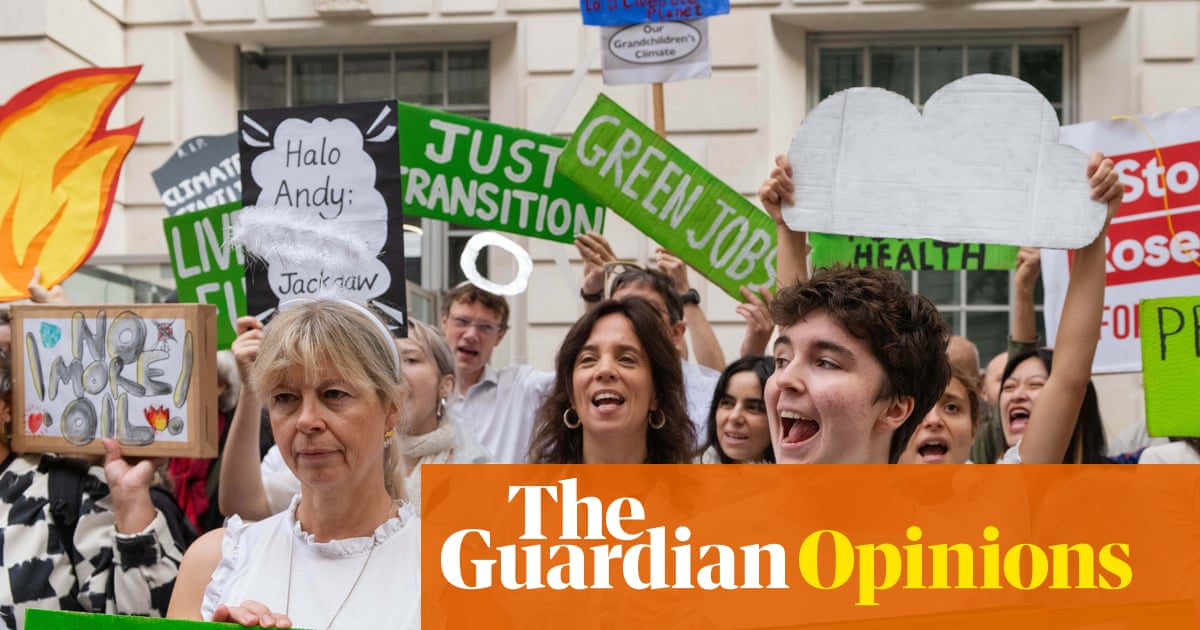
Environmentalists of all political hues must find the language and ideas that turn passion for climate action into impetusThe future of Green politics is under constant discussion after the Holborn and St Pancras byelection, but a much heavier clash – in meaning, symbolism and portent – happened earlier this summer, in King’s Lynn and West Norfolk. The council declared a climate emergency in 2021, along with hundreds of others, and while it was under Conservative control. It is now controlled by independents, and a Reform UK councillor, Austen Moore, moved to scrap the declaration.It was the end of June, and the meeting had to be called off, because of the extreme heat in the King’s Lynn council chamber. A lot of people paused to grimly remark on that irony, but not Moore, who simply rescheduled the motion for the following week, where it was voted down (by 33 to seven). A local scientist and member of Extinction Rebellion liveblogged that debate, adding helpful maps, such as how much of the county was already below the annual flood level – most of it, including King’s Lynn itself. If this all sounds like a cheerful take home, numerous other Reform-led councils have had the same debate and Reform has prevailed. Their arguments can be terrifyingly illiterate. In Kent, councillor Linden Kemkaran asserted that climate change is fine because the world was warmer in Roman times, and as “carbon dioxide … is a trace gas essential for life on Earth”, to try to cut carbon emissions would itself be dangerous.The Guardian’s climate forum 2026: On Tuesday 20 October, join Zoe Williams and our panel of experts – including professor Andrew Haines, Katie White MP, Asad Rehman, Shruti Suresh, Gareth Thomas and Amy Fairman – for a hopeful and solutions-focused evening. Book tickets here or at guardian.liveZoe Williams is a Guardian columnistDo you have an opinion on the issues raised in this article? If you would like to submit a response of up to 300 words by email to be considered for publication in our letters section, please click here. Continue reading...

Guardian columnists and writers on what they’ve been debating, thinking about, reading, and more Continue reading...